Describe the Impact the Han Chinese Had on the Xiongnu
Confucian traditions of both respect for and expected deference from women. But Ive also seen claims that it goes back as far as the historical dynasty which formally ended in AD 220.
What Was The Economic Or Political Value Of The Han Dynasty S Conquest Of The Tarim Basin Quora
The Wikipedia article on Han Chinese traces it back that far.

. Chinese culture history and influence is known to be one of the worlds greatest complex and most important as China is. After their previous rivals the Yuezhi migrated to west. Xiongnu steppe nomads from the north and west 2.
Want this question answered. The greatest impact the Han Chinese had on the Xiongnu was the decline and fall of Xiongnu. But the nomads of the steppes provided ongoing conflict ii.
Starting from Emperor Wus reign r. In 89 CE the Han defeated a large tribal group known as the Xiongnu and drove them away from China they would become the Huns. The tribute system chaogong tizhi 朝贡体制 is a widely used term in the studies of traditional Chinese foreign relations.
Describe the impact the Han Chinese had on the Xiongnu. Though tainted by deadly dramas within the royal court it is also known for its promotion of. The emperor agreed to give his daughter to the Xiongnu ruler and pay an annual gift in gold and silk.
Xiōngnú ɕjʊŋnu were a tribal confederation of nomadic peoples who according to ancient Chinese sources inhabited the eastern Eurasian Steppe from the 3rd century BC to the late 1st century AD. Pushed the Xiongnu back 6. In the four-tiered quasi-caste system used by.
汉族 simplified 漢族 漢人 traditional are a Sino-Tibetan ethnic group that is indigenous to East Asia mostly in mainland China and Taiwan. Prior to these engagements the Xiongnu were a nomadic people who ruled modern Mongolia. The Xiongnu first appear in Chinese historical records about the 5th century bce when their repeated invasions prompted the small kingdoms of North China to begin erecting what later became.
Settled soldiers on former Xiongnu lands 7. Be notified when an answer is posted. Many philosophies about life and governance emerged during the Warring States Period.
Ive seen claims that the ethnonym Han is an early-20th-century invention by late Qing anti-Manchu revolutionaries. Knowledge of the Han periods impact on Chinese culture is obtained through the. In 198 BCE the Han dynasty concluded a treaty with a Central Asian people the Xiongnu.
Chinese literary and scholarly traditions and their spread to Heian Japan and Korea. The Han Dynasty ruled China for a solid four centuries from 206 BCE. From Han China to Rome.
Three philosophies came to prominence. The Han-Xiongnu War 133 BC 89 AD was a conflict between the Han dynasty and the nomadic people from the steppe. 14187 BC the Han empire changed from a relatively passive foreign policy to an offensive strategy to deal with the incr.
The Han Chinese defeated the Xiongnu during the time of the WU emperor. The Han Chinese people Chinese. The Han Chinese people constitute about 20 of the entire human population.
It is generally accepted that the tribute system embodied a set of institutions and social and diplomatic norms that dominated Chinas relations with the non-Chinese world for two millennia until the systems. The war between the Han and Xiongnu led to the declinecollapse of the Xiongnu empire because of the destruction of several Xiongnu kingdoms including several smaller states of the western region as well as a loss of control over the northern region of the Silk Road. Lasting over 200 years it drove Chinese perception of the world as well as the Middle Kingdoms domestic politics.
The Han Dynasty ruled China from 206 BC. This period lasted from about 475 BCE to 221 BCE when the western state of Qin conquered its neighbors and established the Qin Dynasty. The HanXiongnu War also known as the SinoXiongnu War was a series of military battles fought between the Chinese Han Empire and the nomadic Xiongnu confederation from 133 BC to 89 AD.
By the 1st century BCE. Influence of Neo-Confucianism and Buddhism in East Asia. Wudi made allies of the Xiongnus enemies and sent in 100000 soldiers 5.
And was the second imperial dynasty of China. Traditionally kept at bay through bribery 4. Buddhism and its core beliefs continued to shape societies in Asia and included a variety of branches schools and practices.
Although the preceding Qin Dynasty unified China it was the Han Dynasty that kept it together. It defined Chinas views toward the steppeviews that are still presently pertinent. The Han Dynasty.
From 133 BC to 89 AD multiple battles took place between Han and the Xiongnu. Qin rule was the first time all of China had been united under an emperor. Chinas wars against the Xiongnu who were a constant threat to the countrys northern frontier throughout this period led to the Chinese exploration and conquest of much of Central Asia.
This paper analyses the ways in which the development of the Han dynasty influenced Chinese culture to what extent and why. Chinese culture has been evolving for more than one thousand years with one of the most significant influences being the development of the Han dynasty. As Chinas power and influence continue to grow in Asia and beyond many analysts look to Chinese history to understand how a strong China will behave and view the world in the future.
What the Han had failed to realize was that the Xiongnu had been serving as a buffer against other dangerous tribes. Commonly raided Chinese villages 3. Touman who led Xiongnu 220-211 BCE is the first known leader of the Xiongnu Empire.
Up to 24 cash back 1. Removing the Xiongnu opened the flood gates to invasion.

How Successful Were The Xiongnu In Their Raids And Wars Against China Quora
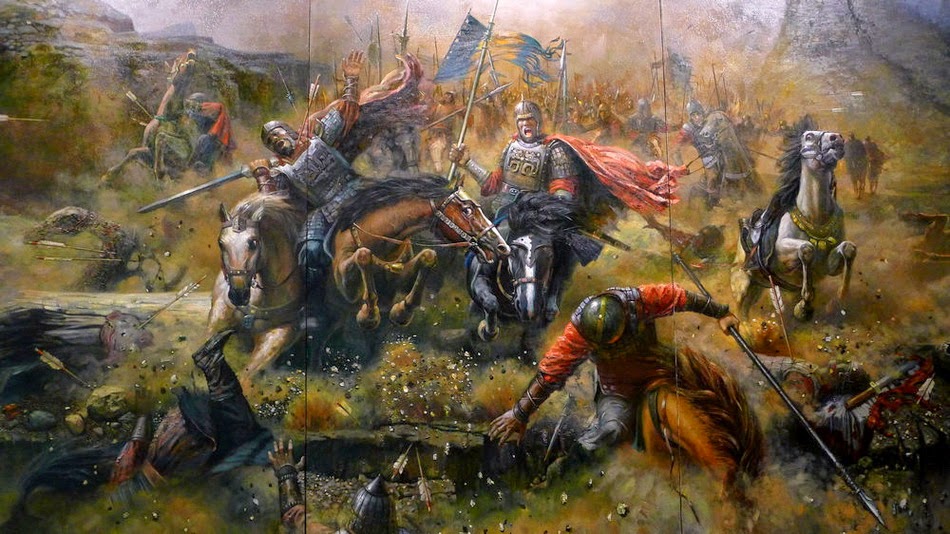
What Edward Luttwak Doesn T Know About Ancient China Or A Short History Of Han Xiongnu Relations Pt 2 The Scholar S Stage
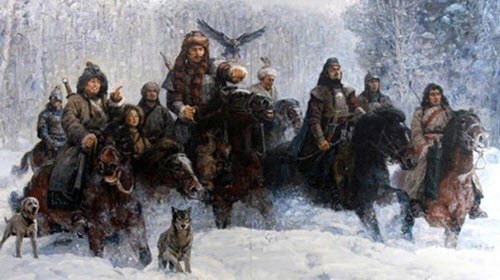
The Xiongnu Culture Third Century Bce Silk Road Com

The Xiongnu Culture Third Century Bce Silk Road Com

Comments
Post a Comment